In most cases, you can re-roof an industrial building without shutting it down. The two things that make it possible are choosing a roof system that goes over the existing roof instead of tearing it off, and planning the work around what's happening underneath it, section by section. When either of those is skipped, that's usually when a roofing project turns into lost production days.
For a plant manager or facility director, the roof is rarely the only thing on the line. It's the production floor, the inventory in the racking, the shipping schedule, and the people working under it. Here's how a well-run industrial re-roof keeps all of that moving.
Why Tear-Offs Are What Force Shutdowns
Most shutdowns during roof work trace back to one decision: tearing the old roof off. A tear-off opens the roof deck over whatever is below it, sometimes for days at a time across a section. That creates a short list of problems a working facility can't absorb:
- Exposure. An open deck means one surprise rainstorm can put water directly onto equipment, product, or electrical systems.
- Debris. Removing old membrane, insulation, and fasteners sends dust and material down through gaps in the deck, which is a real problem over production lines, food processing, or clean storage.
- Noise and vibration. Tear-off work is loud and physical, and it travels through the building structure.
- Heat and flame. Many traditional systems, like torch-applied modified bitumen and hot-mopped built-up roofing, rely on open flame or heated asphalt, which brings fire risk to a roof sitting over an active operation.
None of that means tear-offs are always wrong. If the existing roof is saturated with water or the deck is failing, replacement is the right call. But when the roof is still structurally sound, avoiding the tear-off is the single biggest lever you have for keeping the building open. Tillotson's industrial roofing services are built around that idea: figure out whether the roof can be restored before anyone assumes it needs to come off.
Step 1: Confirm the Roof Can Be Covered Instead of Removed
Going over the existing roof only works if what's underneath is dry and sound. Wet insulation trapped under a new system keeps degrading, adds weight, and can show up later as blisters or deck damage. That's why the first step on any occupied-building project should be a moisture survey, plus core samples where the readings look suspicious. Building codes also limit how many roof layers can be stacked on a structure, so the existing build-up needs to be checked before anyone commits to a recover.
If the survey shows isolated wet areas, those sections can be cut out and replaced while the rest of the roof is restored. That's still far less disruptive than a full tear-off, and it's a common outcome on large industrial roofs that have had a few chronic leaks.
Step 2: Choose a System That Goes On Over the Top
The two systems that do the most to keep a facility running are spray polyurethane foam and fluid-applied coatings.
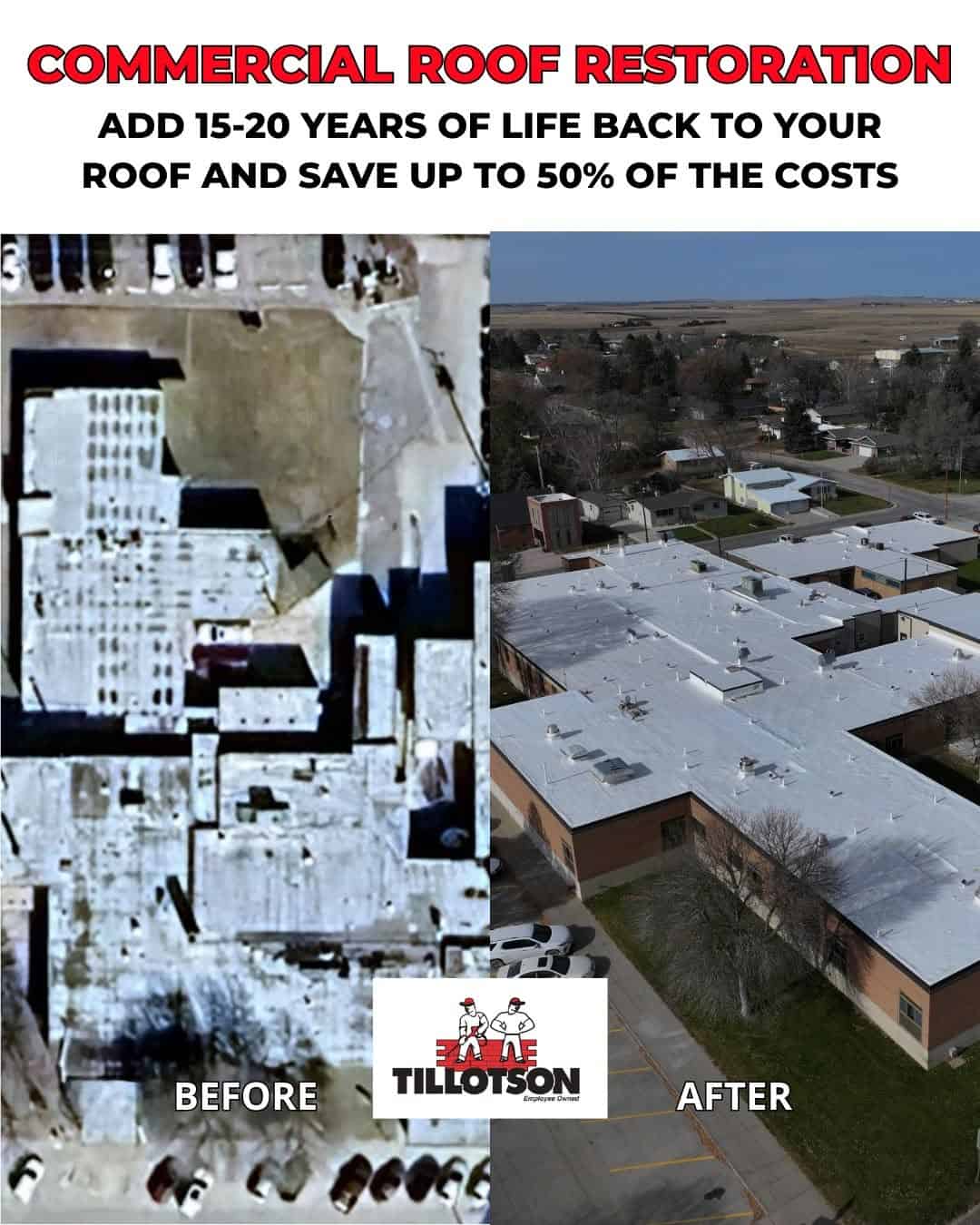
Spray foam roofing is applied as a liquid that expands into a seamless, self-flashing layer over the existing roof. It adds insulation value, seals around penetrations without separate flashing pieces, and weighs less than one pound per square foot, which matters on long roof spans. Because it goes on over the existing surface, the roof over your floor never has to be opened.
Roof coatings work the same way at a thinner scale. Silicone, acrylic, and polyurea coatings are rolled or sprayed over a sound existing membrane or metal roof to stop leaks and add years of service life. Both systems are cold-applied, meaning no torches or hot kettles on the roof. If you're weighing the numbers between restoring and replacing, our restoration vs. replacement cost breakdown walks through how that decision usually pencils out.
Step 3: Phase the Roof Around What’s Underneath
A large industrial roof doesn't have to be worked all at once. Breaking it into zones based on what sits below each one lets the crew schedule around the most sensitive areas:
- Production areas get scheduled during planned downtime, changeovers, or lower-volume shifts where possible.
- Shipping and receiving zones get worked outside peak dock hours so crew traffic and equipment don't compete with trucks and forklifts.
- Office and break areas can often be done first, since they're the easiest to temporarily relocate people from if needed.
- Cold storage, clean rooms, or food processing get extra planning around odor, temperature, and debris control.
Each zone should be fully sealed and watertight at the end of every workday. On a restoration project that's much easier than on a tear-off, since the existing roof stays in place underneath, but it still needs to be part of the plan. Timing the overall project for the right weather window matters too, since coatings and foam need dry conditions and specific temperature ranges to cure properly.
Step 4: Plan Around HVAC Fresh-Air Intakes
This is the step that gets missed most often, and it's the one employees notice first. Rooftop units pull outside air from right at roof level. If spray foam or coating work happens upwind of an open fresh-air intake, vapors and odor can get pulled straight into the building.
A good plan maps every intake on the roof before work starts and coordinates with the facility's maintenance team to close outdoor air dampers, temporarily shut down, or isolate the units closest to the active work zone. The EPA's ventilation guidance for spray polyurethane foam makes the same point for SPF work generally: isolate HVAC systems near the application and direct vapors away from air intakes and occupied areas. Crews should also watch wind direction throughout the day, since a shift in wind can change which intakes are downwind of the work. Wind matters for overspray too, so parking lots, neighboring equipment, and adjacent buildings should be protected or the work paused when conditions aren't right.
Odor is worth planning for even when everything is done right. Some coatings are solvent-based and carry a noticeable smell, while water-based acrylics and many high-solids silicones are much lower odor. If your building has odor-sensitive operations, that should factor into the product choice from the start.
Step 5: Keep Open Flame Off the Roof
Torch-applied systems and hot asphalt bring real fire risk to a roof over an active operation, and many facilities' insurers and safety managers treat rooftop open flame as hot work that requires permits, fire watches, and extra precautions. Cold-applied foam and coatings avoid most of that.
One thing to keep in mind after the job is done: cured spray foam shouldn't be heated, cut with a torch, or welded near. The EPA notes that hot work on or near polyurethane foam can release harmful emissions, so any future rooftop equipment work involving welding or cutting should be planned with that in mind.
Step 6: Stage Materials and Equipment Away From Your Operation
Industrial roof projects need a ground-level staging area for the spray rig, materials, and waste. Where that goes matters. It should stay clear of truck docks, forklift lanes, emergency exits, and employee parking, and any crane or hoist lifts to the roof should be scheduled during lower-traffic hours. Hoses and lines run up the outside of the building, not through it. A short site walk with the facility manager before the project starts usually settles all of this in one conversation.
Step 7: Communicate Before and During the Work
Most complaints during roof projects come from surprises, not the work itself. Before the job starts, let employees know what's happening overhead, when, and what they might hear or smell. During the project, a daily check-in between the crew lead and the facility manager keeps the schedule aligned with any production changes and gives your team one person to call if something comes up.
Questions to Ask Before You Hire
If keeping the building open is a requirement, these questions will tell you quickly whether a contractor has actually planned for it:
- Will you run a moisture survey before recommending a recover, and will I see the results?
- Which system are you proposing, and does it require tearing off any part of the roof over my floor?
- How will you phase the work, and which zones will be done when?
- How will you handle our rooftop units and fresh-air intakes during application?
- Will there be any open flame or hot work on the roof?
- Where will you stage equipment, and how will you keep it clear of our docks and traffic?
- Who is my daily point of contact, and how will schedule changes be communicated?
- Is the crew on my roof your own employees, or a subcontractor?
A contractor who has done this before will have specific answers to every one of these. Vague answers are usually a sign the plan doesn't exist yet.
How Tillotson Approaches It
Spray-applied roofing has been Tillotson's specialty for decades, which is a big part of why most of our industrial projects never require opening the roof over a customer's floor. Every project starts with a field expert, not a salesperson, inspecting the roof, the penetrations, and the deck, and running moisture scans before recommending anything. You get a written report that lays out whether restoration or replacement makes sense, and the work plan is built with your facility manager before a crew ever shows up.
The crew that does the work is our own. Tillotson has been 100% employee-owned since January 1, 2023, and our technicians are OSHA trained, so the people on your roof have a direct stake in getting the job right and doing it safely.
FAQ
Can a warehouse or plant stay open during roof replacement? In most cases, yes, especially when the existing roof can be restored with spray foam or a coating instead of torn off. A full tear-off is harder to do around an active operation, but phasing it by section can still keep most of the building running.
Does spray foam or roof coating work smell inside the building? It can if vapors get pulled in through rooftop air intakes, which is why intakes near the work zone should be closed or the units shut down during application. Product choice matters too, since some coatings are much lower odor than others.
How do I know if my roof can be restored instead of replaced? A moisture survey is the answer. If the deck is sound and the insulation is mostly dry, restoration is usually possible. If moisture is widespread, replacement is typically the better long-term decision.
Do we need to move inventory or equipment out from under the roof? Usually not on a restoration project, since the existing roof stays in place. On a tear-off, sensitive equipment or product directly below active sections may need to be covered or moved temporarily.
Can roof work be scheduled around our production calendar? It should be. Phasing the roof into zones lets the most sensitive areas be worked during planned downtime or lower-volume periods, while the rest of the roof is done during normal operations.
Keep Your Facility Running
If your roof is leaking over production or storage and a shutdown isn't an option, the first step is finding out what the roof actually needs. Schedule a free industrial roof assessment and a field expert will inspect your roof, map any hidden moisture, and give you a written plan that works around your operation.