If water is dripping from the ceiling of your metal building on a dry day, there's a good chance your roof isn't leaking at all. Condensation forms when warm, moist air inside the building touches the cold underside of a metal roof and cools below its dew point, turning the moisture in the air into water droplets. In a large metal building, that can look and feel exactly like a roof leak, right down to puddles on the floor and water on equipment or product.
The difference matters because the fixes are completely different. Patching or coating the roof won't stop condensation, and insulating the building won't stop a real leak. Here's how to tell which one you have, why metal buildings in Nebraska are especially prone to it, and what actually stops it.
Leak or Condensation? How to Tell
A few patterns point strongly one way or the other:
| What you're seeing | Points to |
|---|---|
| Dripping on cold, clear mornings with no rain | Condensation |
| Water shows up after a heater runs or a big temperature drop overnight | Condensation |
| Drips spread across the ceiling in a regular pattern, often along purlins or fastener lines | Condensation |
| Frost or ice on the underside of the roof in winter | Condensation |
| Water only appears during or right after rain or snowmelt | Leak |
| Water shows up in the same one or two spots every time | Leak, often at a seam, fastener, or penetration |
| Rust streaks running down from screw heads on the outside of the roof | Leak at failing fasteners |
Plenty of buildings have both. A roof with worn fasteners can leak during storms and also drip from condensation on cold mornings. That's why it's worth having someone look at the roof and the interior together instead of assuming it's one or the other. Tillotson's industrial roofing team looks at both, since the company handles roofing and insulation under one roof.
Why Metal Buildings Sweat
Steel conducts temperature extremely well, so a metal roof panel gets nearly as cold as the outside air. Any warm, humid air inside the building that touches that cold surface can cool past its dew point and leave water behind.
Most metal buildings are also leaky in ways that make it worse. Gaps at seams, eaves, and fasteners let air move freely, and many older buildings have no insulation, thin insulation, or insulation with a torn or missing vapor retarder facing. Once humid air gets behind the insulation, it can condense where you can't see it, soaking the insulation, rusting purlins and fasteners, and cutting the insulation's effectiveness.
The moisture itself comes from inside the building more often than people expect:
- Unvented gas-fired heaters, which release water vapor as they burn fuel
- People and operations, including washdown, cooking, processing, and wet equipment or vehicles brought inside
- Stored materials, like grain, hay, or other ag products that release moisture
- New concrete slabs, which give off moisture for months as they cure
- Air leaks that let humid outdoor air in during spring and summer
Why It’s Worse in Nebraska
Nebraska weather is close to a worst case for metal building condensation. Winters are cold enough to drive roof panels well below the dew point of heated indoor air, summers are humid, and spring and fall bring big swings between warm days and cold, clear nights. A building that's fine all afternoon can be dripping by morning. Condensation can show up in summer too, when humid outdoor air leaks into an air-conditioned building and hits cooled surfaces, ducts, or panels.
What Condensation Costs a Facility
Condensation is easy to treat as a nuisance, but in a working building it does real damage over time:
- Product and equipment damage. Drips land on inventory, machinery, electrical panels, and anything stored in racking.
- Corrosion. Constant moisture rusts purlins, fasteners, and the underside of roof panels, which eventually becomes a roofing problem too.
- Wet, useless insulation. Insulation that soaks up condensation loses much of its insulating value and can sag or fall.
- Slippery floors. Puddles under drip lines are a slip hazard for employees and forklift traffic.
- Mold and odor, especially in buildings storing feed, grain, or paper products.
- Sanitation risk in food and beverage processing, where water dripping from overhead structure is a contamination concern.
How to Stop Metal Building Condensation
The goal is simple: keep warm, moist interior air from ever touching a surface cold enough to condense it. According to Metal Construction News' guide to condensation control in metal building systems, that comes down to insulation thick enough to keep surfaces above the dew point, paired with a vapor retarder on the warm side that stops moisture from reaching cold metal. In practice, there are four main ways to get there.
1. Spray Foam Insulation on the Underside of the Roof
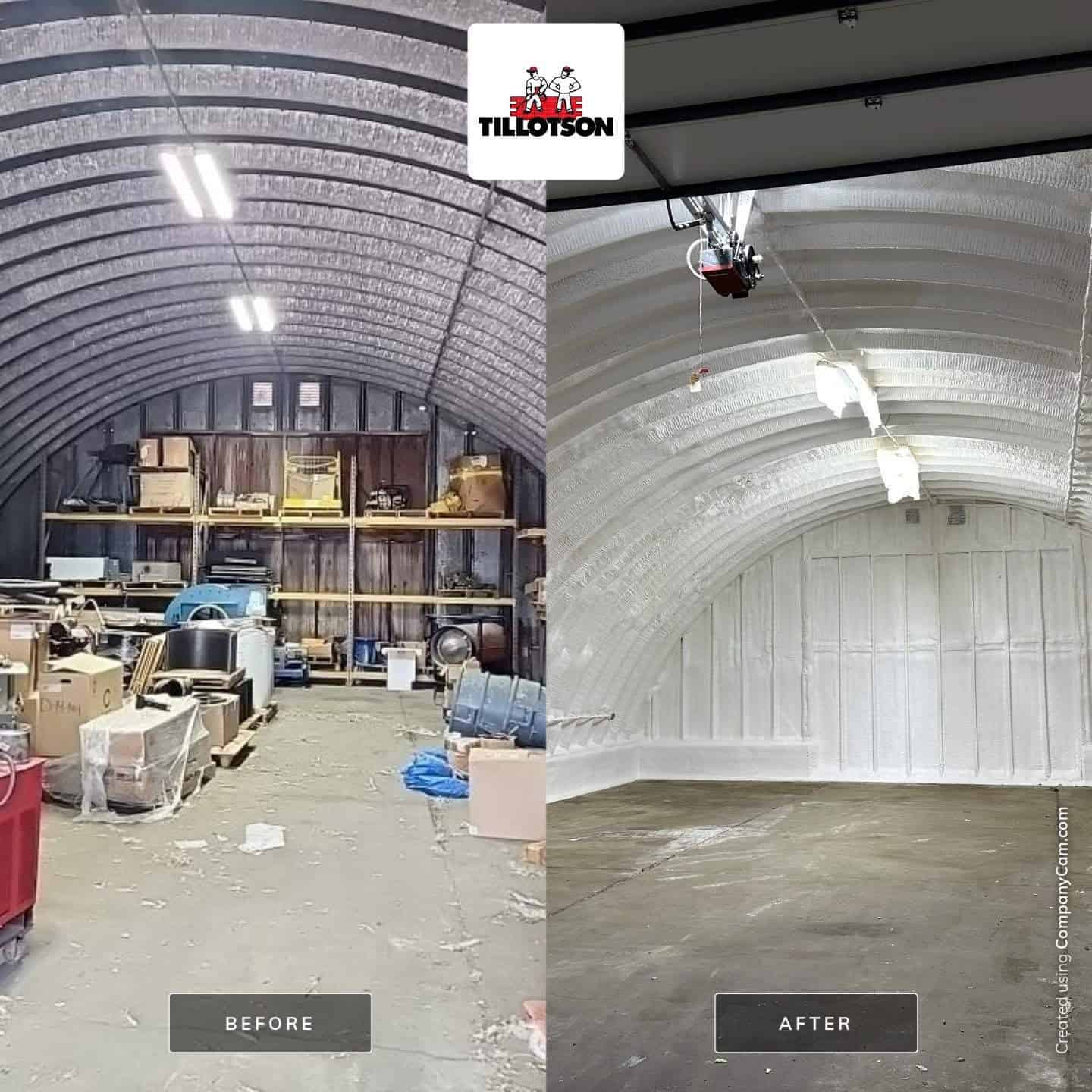
For most existing metal buildings, closed-cell spray foam insulation is the most complete fix. It's sprayed directly onto the underside of the roof panels and walls, where it bonds to the metal and does three jobs at once:
- It insulates, keeping the inside surface warm enough that it stays above the dew point.
- It air seals, closing the gaps at seams, eaves, and fasteners that let humid air move around.
- At sufficient thickness, closed-cell foam also slows vapor movement, so moisture can't work its way back to the cold metal.
Because it's bonded directly to the panels, there's no hidden air space between the insulation and the metal where condensation can form unseen, which is the weak spot of loose or faced blanket insulation that has torn or sagged. It also covers the fasteners and purlins that often drip first. Interior spray foam work does require clearing and ventilating the area being sprayed until it's safe to re-enter, but large buildings can be done in sections so the rest of the operation keeps running.
2. Fix or Replace Failing Blanket Insulation
Many metal buildings have vinyl-faced fiberglass insulation under the roof. When that facing is torn, punctured, or poorly sealed at the seams, humid air gets behind it and condenses on the metal, out of sight. Repairing the facing can help in limited areas, but insulation that's already wet, sagging, or moldy usually needs to come out and be replaced.
3. Reduce Moisture Inside the Building
Cutting down the moisture source makes any insulation work better. Vent gas-fired heaters to the outside, use exhaust fans in washdown or processing areas, keep doors closed in humid weather, and avoid storing wet materials inside when possible. In some buildings, dehumidification is worth considering.
4. Add Ventilation Where It Fits
Ventilation can help move humid air out, especially in ag buildings with livestock or stored crops. But ventilation alone rarely solves condensation in a Nebraska winter, because pulling in more cold outdoor air doesn't warm the roof panels. It works best alongside insulation, not instead of it.
What Won’t Fix It
Coating or repairing the outside of the roof won't stop condensation. Roof work fixes leaks coming in from outside, while condensation comes from the moisture already inside the building. If a contractor proposes a roof coating to fix dripping that only happens on cold, dry mornings, get a second look before signing.
When It Really Is the Roof
Sometimes the dripping is a leak, or a leak and condensation together. On metal roofs, leaks usually start at the same predictable spots: fasteners whose rubber washers have dried out and cracked, loosened or rusted screws, open side laps and end laps, and flashing around vents and rooftop units. If the inspection turns up those problems, metal roof restoration seals the fasteners and seams, treats rust, and coats the panels without replacing them. On ag and pole buildings, the same approach applies through Tillotson's metal building restoration and pole building roofing work.
For buildings with both problems, the right order is usually to stop the leaks first, then insulate. Spraying foam under a roof that's still leaking just hides the leak and traps water against the metal.
If the roof itself is near the end of its life and you're weighing options, our comparison of the best roof systems for an industrial building walks through what fits large metal and low-slope buildings.
How Tillotson Approaches It
Most companies only see half of this problem. A roofer looks at the roof, an insulation company looks at the inside, and the building owner is left guessing which one is right. Tillotson does both roofing and spray foam insulation, so a field expert can look at the outside and the inside on the same visit, figure out whether you're dealing with a leak, condensation, or both, and recommend the fix in the right order.
Tillotson's crews have insulated metal shops, pole buildings, and commercial buildings across Nebraska with spray foam, and the company has served Nebraska since 1987, today from offices in Omaha, Lincoln, Kearney, and Aurora. Every estimate starts with an inspection, not a sales pitch, and comes with a written recommendation.
FAQ
Why is my metal building dripping water when it isn't raining? That's almost always condensation. Warm, moist air inside the building is touching the cold underside of the metal roof and cooling below its dew point, which turns the moisture in the air into water droplets. It's most common on cold, clear mornings and after heaters have been running.
How do I stop condensation in a metal building? Keep warm, moist air away from cold metal. For most existing buildings, closed-cell spray foam on the underside of the roof and walls is the most complete fix because it insulates, air seals, and slows vapor movement at the same time. Reducing interior moisture, like venting gas heaters, helps too.
Will a vapor barrier stop condensation in a metal building? A vapor retarder helps, but only when it's continuous, sealed at the seams, and paired with enough insulation to keep it above the dew point. Torn or poorly sealed facings let humid air get behind them and condense out of sight.
Does ventilation stop metal roof condensation? It can help, especially in ag buildings, but ventilation alone rarely solves it in a Nebraska winter because the roof panels stay cold. It works best combined with insulation.
Can a roof coating fix condensation? No. Coatings stop water coming in from outside. Condensation comes from moisture already inside the building, so it needs insulation, air sealing, and moisture control.
Find Out What’s Really Dripping
If water is showing up inside your metal building and you aren't sure whether it's a leak, condensation, or both, one visit can settle it. Schedule a free inspection and a Tillotson field expert will check the roof and the interior, tell you what's causing the water, and give you a written plan to stop it.