What is the actual cost difference between replacement and restoration in Nebraska?
As commercial roofs age, building owners are faced with an important question: What is the real cost difference between replacing a commercial roof and restoring it? This is not a simple matter of choosing the cheaper option - it involves understanding long-term value, material behavior, labor requirements, tax implications, and how each choice affects the performance of the building over time.
In 2026, this question has become even more important because both roofing materials and labor costs continue to rise nationwide. Inflation in the construction sector, supply chain pressures, and the increasing cost of asphalt-, rubber-, and polymer-based roofing materials mean that even basic roofing projects now require careful planning. A full commercial roof replacement today typically costs between $5.50 and $12.00 per square foot, depending on the type of roofing system, the complexity of the tear-off, safety needs, building height, and required insulation upgrades. Some specialty systems and roofs with multiple layers can even exceed this range.
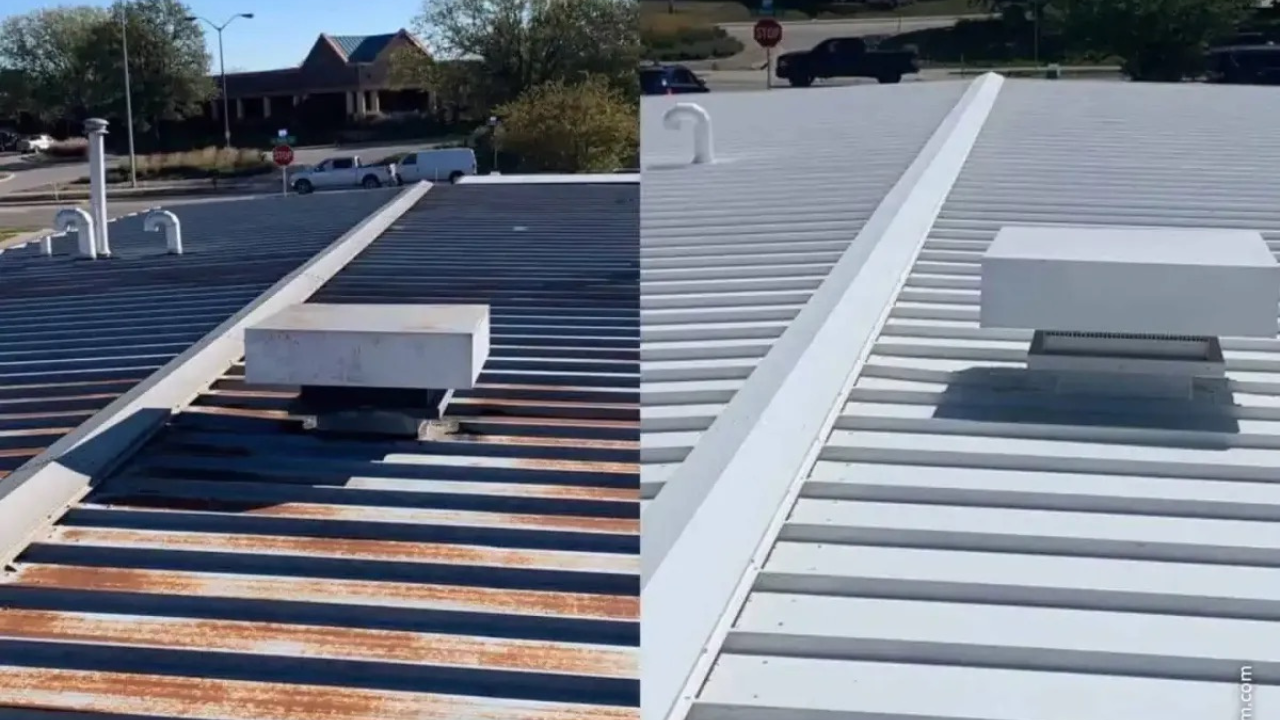
Roof restoration, on the other hand, avoids most of those tear-off expenses and instead focuses on upgrading the performance of the existing roof system. Restoration often costs 40% to 60% less [1][2][3]. This savings comes not just from avoiding tear-off, but also from shorter labor times, reduced disposal fees, and the ability to preserve existing insulation. Insulation replacement alone can account for up to half the cost of a full roof replacement. Keeping that insulation in place, when it is dry and structurally sound, dramatically changes the cost equation.
These percentage savings translate into real dollars. On a 100,000 sq. ft. commercial building, the difference between a replacement and a restoration can be hundreds of thousands of dollars - savings that directly impact operating budgets, reserves, and capital planning for years into the future.
How do advanced coatings and technologies make restoration viable?
A large part of the renewed popularity of restoration comes from rapid advancements in modern coating technologies. Today’s acrylic, silicone, and urethane systems are engineered to bond to a wide variety of roofing materials, including metal, modified bitumen, TPO, EPDM, SPF, and aging built-up roofs. These coating systems are not the thin, inexpensive products commonly sold decades ago - they are thick, elastomeric membranes designed to handle extreme heat, cold, UV exposure, and movement.
Tillotson’s ability to use ReDry Technology enhances the effectiveness of restoration even more. ReDry Technology allows isolated wet areas to be dried rather than removed, and this is significant because moisture trapped in insulation is one of the most common reasons restorations cannot be performed. While many roofing contractors immediately recommend tear-off when moisture is found, Tillotson’s methods allow for drying, rather than removing, these areas when appropriate.
This means:
- Less disruption to building occupants
- Less time spent on the roof
- Lower labor costs
- Less material entering landfills
- A significantly higher chance that the roof qualifies for restoration rather than replacement
Through this process, Tillotson often saves building owners 20% to 50% compared to the cost of a full tear-off [1].
Additionally, modern coating systems are designed to create a seamless waterproof barrier. This is especially valuable because many leaks occur at seams, fasteners, flashings, and penetrations - areas where traditional roofs naturally have weak points. A liquid-applied membrane eliminates many of those weak points entirely.
How do tax rules favor restoration over replacement for Nebraska commercial building owners?
Beyond direct cost savings, restoration often brings major tax advantages. Many commercial roof restorations qualify as maintenance or repairs, meaning they can be fully deducted in the same tax year instead of being depreciated over 27.5 years (or longer for some asset classes).
Sources confirm this treatment: [4][5].
This means a building owner can:
- Reduce taxable income immediately
- Improve cash flow
- Offset the cost of the restoration during the same financial year
- Avoid carrying depreciation over nearly three decades
Meanwhile, a full roof replacement almost always qualifies as a capital improvement, meaning it must be depreciated over many years. This delays the financial benefit and reduces immediate tax relief.
For owners managing multiple properties or operating in competitive commercial markets, the ability to deduct the full expense in the same year can be a substantial advantage.
When should a full commercial roof replacement be chosen instead of restoration?
Although restoration offers significant benefits, it is not appropriate in every situation. A replacement is necessary when:
- Insulation is heavily saturated
- The roof deck is rusted, rotted, or structurally compromised
- The membrane is severely damaged
- The roof has multiple failing layers
- The building requires major redesign of drainage or insulation levels
However, when the underlying structure is still in good condition, restoration has a uniquely powerful advantage: it can extend the life of the roof not just once, but repeatedly. When a coating system reaches the end of its warranty and begins to show wear - whether that is 10, 15, or 20 years later - the roof can be recoated, beginning an entirely new warranty cycle.
As long as:
- The roof is inspected annually
- Small issues are corrected promptly
- Ponding water is managed
- The surface remains sound
then the building may never require a tear-off during its lifetime. This is one of the strongest long-term financial benefits of restoration.
Why are annual inspections so important for long-term roof performance?
Coating systems perform best when combined with a proactive inspection plan. Tillotson recommends annual roof inspections because even a high-performing roof can develop small issues that, if ignored, grow into costly repairs.
Annual inspections identify:
- Small punctures from falling debris
- Damage from HVAC technicians
- Movement at seams
- Minor cracks or blisters
- Storm-related wear
- Drainage problems
Many of these issues take only minutes to fix when caught early, but can cause significant damage if left unaddressed. Regular maintenance ensures that the coatings continue to perform as intended and allows the roof to remain eligible for future recoats.
With this approach, roofs often last decades longer than originally expected.
What sets Tillotson Enterprises’ roof coating expertise apart in the Midwest?
Tillotson Enterprises has more than 30 years of hands-on experience applying acrylic, silicone, and urethane roof coating systems across the Midwest. This region has some of the harshest weather swings in the country, including:
- Summer temperatures up to 110°F
- Winter lows down to –20°F
- Rapid freeze–thaw cycles
- High winds exceeding 60 mph
- Hail
- Intense UV exposure
Not all coatings can tolerate these extremes. Some cheaper coatings use plasticizers or lower-grade resins that become brittle under UV sunlight. Once brittle, these coatings crack, peel, and lose adhesion.
The roof coatings Tillotson uses are specifically selected because they have a proven track record of lasting far beyond their warranty period under Midwest conditions. Many buildings coated decades ago are still performing today with only routine maintenance and recoating.
How important are crew training and application quality?
Coating performance depends heavily on the skill of the installation team. A coating system is only as good as the crew that applies it - which is why Tillotson emphasizes training and consistency.
As we remind building owners: “There’s no roofer in the bucket.”
This means that having a high-quality coating product does not automatically result in a high-quality roof. The installer must understand:
- Correct coating thickness
- Proper substrate preparation
- Moisture detection
- Adhesion testing
- Flashing reinforcement
- Weather conditions
- Dry time windows
Tillotson Enterprises’ teams perform a full self-inspection checklist after every project, documenting:
- Thickness
- Mil readings
- Application uniformity
- Detail work
- Flashing reinforcement
- Seam treatments
This ensures reliable, long-term results.
How do we determine whether restoration or replacement is the right choice?
Choosing the correct solution begins with testing and analysis. Tillotson uses both:
- Non-destructive moisture scans
- Destructive core sampling
Moisture scanning identifies hidden pockets of saturation beneath the roof membrane, allowing the team to determine whether those areas can be dried or must be removed.
Core samples confirm:
- Insulation dryness
- Deck integrity
- Membrane condition
- Whether layers are adhered or loose
This diagnostic approach ensures that each building receives the solution that provides the best long-term performance.
Because Tillotson offers acrylic, silicone, and urethane coatings, the company can match the coating type to the specific needs of the roof. Not every coating works for every roof system, and Tillotson does not follow a “one-size-fits-all” philosophy.
Why does timing matter so much in 2026?
Material prices have risen steadily, and suppliers have announced 6% to 10% price increases across many roofing products. This affects both replacement and restoration costs.
If a roof is near the end of its life, delaying action can result in:
- Higher material costs
- Larger repair needs
- More moisture intrusion
- Damage that disqualifies the roof from restoration
- The need for a full tear-off later instead of a cost-effective restoration now
For roofs that qualify for restoration, savings remain substantial [1][2][6].
On a 100,000 sq. ft. building:
- Replacement ≈ $800,000
- Restoration ≈ $350,000 to $450,000
The difference is substantial, especially when factored over multiple reroof cycles.
What should Nebraska commercial building owners consider when choosing between options?
Choosing between restoration and replacement requires understanding the roof’s condition and the building owner’s long-term plans.
Restoration is typically the best choice when:
- The roof is mostly dry
- Insulation is sound
- Deck is stable
- The owner wants long-term ROI
- Minimal disruption is important
- Tax advantages are desirable
Replacement becomes the better investment when:
- Insulation is saturated
- Deck is deteriorating
- The membrane is failing across large areas
- The roof has reached the end of its structural life
A proper inspection - including moisture testing and core sampling - is essential to determine the correct path.
How can building owners protect their roof asset for years to come?
Early evaluation and annual inspections are the best ways to protect a commercial roof. Acting before small issues escalate ensures:
- Lower costs
- Better energy efficiency
- Stronger long-term performance
- Protection against extreme weather
- Eligibility for future recoats
With the right partner - one with decades of coating expertise, advanced tools, and proven products - a commercial roof can remain one of the building’s strongest and most valuable assets for many years.
Sources
[1] Simon Roofing – Is a Re-Roof Alternative an Option for Your Commercial Roof?
https://simonroofing.com/learn/is-a-re-roof-alternative-an-option-for-your-commercial-roof/
[2] Henry – How Roof Coatings Lower Multi-Tenant Maintenance Costs
https://www.henry.com/en-CA/knowledge-center/commercial-blog/roof-coatings-lower-multi-tenant-maintenance-costs/
[3] Schweitzer Spray Coatings – The Hidden Cost of Roof Replacement: Why Restoration Makes Financial Sense
https://sspraycoatings.com/the-hidden-cost-of-roof-replacement/
[4] Wedge Roofing – Commercial Roofing Improvements Are Now 100% Tax Deductible
https://www.wedgeroofing.com/blog/commercial-roofing-tax-deduction
[5] Hedrick Construction – Are Commercial Roofing Expenses Tax Deductible?
https://www.hedrickconstructioninc.com/blog/are-commercial-roofing-expenses-tax-deductible
[6] FMJ Magazine (IFMA) – Restoration vs. Replacement
https://fmj.ifma.org/restoration-vs.-replacement