If you’re seeing cracks, sticking doors, or uneven floors, you might be dealing with foundation settlement. In Nebraska, settlement often ties back to soil behavior and water. This Tillotson Enterprises guide explains why settlement happens and how steel piers can stabilize (and sometimes lift) a home by transferring its weight to stronger soil.
Why foundations settle so often in Nebraska
Nebraska homeowners deal with a mix of soil conditions that can be tough on foundations. Many areas have clay-rich soils that expand when wet and shrink when dry. That constant movement can reduce support under footings and create uneven settlement. Add heavy spring rains, snowmelt, dry summers, and freeze–thaw cycles - and the soil around your home is rarely “steady” for long.
Settlement happens when the soil supporting a foundation can’t hold the load evenly. Sometimes that soil compresses slowly over time. Other times it’s disturbed by water movement, poor drainage, or backfill that wasn’t compacted well during construction. Even homes built well can settle if the soil conditions change enough or water consistently collects around a portion of the foundation.
Quick takeaway: Settlement is usually a soil-and-water problem, not a “bad concrete” problem. Permanent repairs are about restoring stable support - not just patching cracks.
Early signs of settlement homeowners notice
Foundation settlement can show up in different ways depending on where the movement is happening. You may notice a single corner sinking, or a long wall that slowly drops. Common signs include:
- Cracks in drywall near doors, windows, or ceilings
- Stair-step cracks in brick or block (often outside)
- Doors that stick or won’t latch like they used to
- Uneven floors or a “soft” feeling in certain spots
- Gaps at trim, baseboards, or where walls meet ceilings
- Separation between porch/steps and the house
These symptoms don’t always mean you need piers, but they do mean it’s worth understanding what’s happening. The important question is whether the movement is historical (old and stable) or active (still moving). A professional evaluation looks at patterns, elevations, drainage, and the likely cause.
What foundation piers are (plain English)
A foundation pier is a structural support installed under (or alongside) your foundation to help carry the weight of the home. Think of it like adding a strong “leg” under the house that reaches down to more stable soil. Instead of your foundation relying only on the upper layers of soil - which may be soft, wet, or changing - piers transfer load to deeper, stronger strata.
Most modern foundation piers are made of steel. They are installed near the footing, then driven or screwed into the ground. A bracket connects the pier to the foundation. This bracket is what actually transfers the weight from your home into the pier system.
How piers stop settlement and help lift
Piers do two main jobs:
- Stabilization: They prevent further settling by providing a load path to stable soil.
- Lift (in some cases): They can sometimes raise a settled section closer to its original position.
Stabilization is the goal in nearly every project. Lift is often possible, but the amount depends on the structure, how long the settlement has existed, soil conditions, and whether other parts of the home have “adjusted” to the movement. Even when full lift isn’t realistic, stabilizing the foundation can stop progression and prevent new damage.
Homeowner reality check: A pier system is not cosmetic patching. It’s structural support. Even if cracks need cosmetic repair afterward, the main win is stopping movement and protecting the home’s long-term value.
Animated pier installation walkthrough
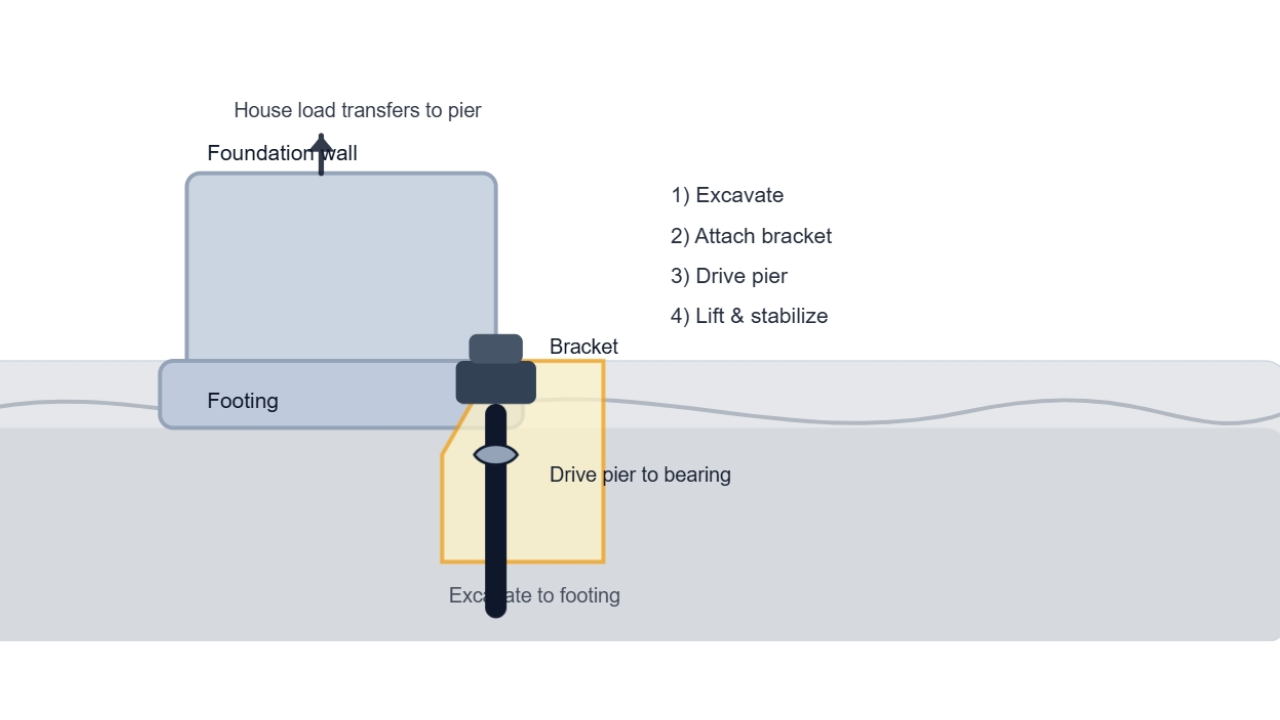
Homeowners often ask what pier installation looks like. While every job is a little different, most pier projects follow the same basic steps: excavate to the footing, attach a bracket, install the pier to a stable bearing layer, then use hydraulic equipment to transfer load and stabilize. The animation below shows that sequence.
Foundation wallFootingExcavate to footingBracketDrive pier to bearingHydraulic jackHouse load transfers to pierStable bearing layer1) Excavate2) Attach bracket3) Drive pier4) Lift & stabilize
Animation: Typical pier sequence (excavate → bracket → drive → lift/stabilize).
In real installations, your crew will protect landscaping where possible and focus excavation only where piers are needed. Once piers are installed and loads are transferred, excavations are backfilled and the area is cleaned up.
Common pier types and when they’re used
Push piers (driven steel piers)
Push piers are steel sections driven into the ground using hydraulic force from the home’s weight and equipment. They are often used when you need deep support and there’s confidence you can reach a competent bearing layer. Push piers can be a good fit for many Nebraska homes where near-surface soils are unstable but deeper strata are stronger.
Helical piers (screw piers)
Helical piers have one or more “helix” plates and are screwed into the soil like a giant screw. They can be installed with controlled torque, which helps predict capacity. Helicals are often chosen when soil conditions make driving less predictable, or when you need a pier to work well in a wider variety of soils. They’re also commonly used for porches, additions, and lighter structures.
What about wall anchors or braces?
Wall anchors and braces are used primarily for bowing walls caused by lateral soil pressure (a different problem than settlement). Sometimes a home needs both approaches: piers to stop settlement, and wall stabilization to address inward movement. A proper evaluation separates these issues so you’re not fixing the wrong problem.
What to expect during a pier project
A typical pier project starts with a plan: how many piers, where they go, and what areas of the home are affected. Homeowners appreciate knowing the “why” behind placement. Piers are placed where the load needs support - often at corners, under key load-bearing walls, or near areas showing the most movement.
On installation day, the crew excavates small sections down to the footing. Brackets are attached to the foundation. Then the pier sections are installed to reach stable strata. Once the pier is seated, hydraulic jacks transfer load. This is where stabilization happens, and where lift may occur if conditions allow.
After structural work, cosmetic repairs often follow: crack repair, drywall touch-ups, resetting doors, or minor trim adjustments. Some homeowners choose to wait a short period before final cosmetic work so they can confirm everything is stable.
Timeline note: Many pier projects can be completed in days, not weeks. Exact timing depends on access, number of piers, and how much excavation is required.
Before/after results (what changes after stabilization)
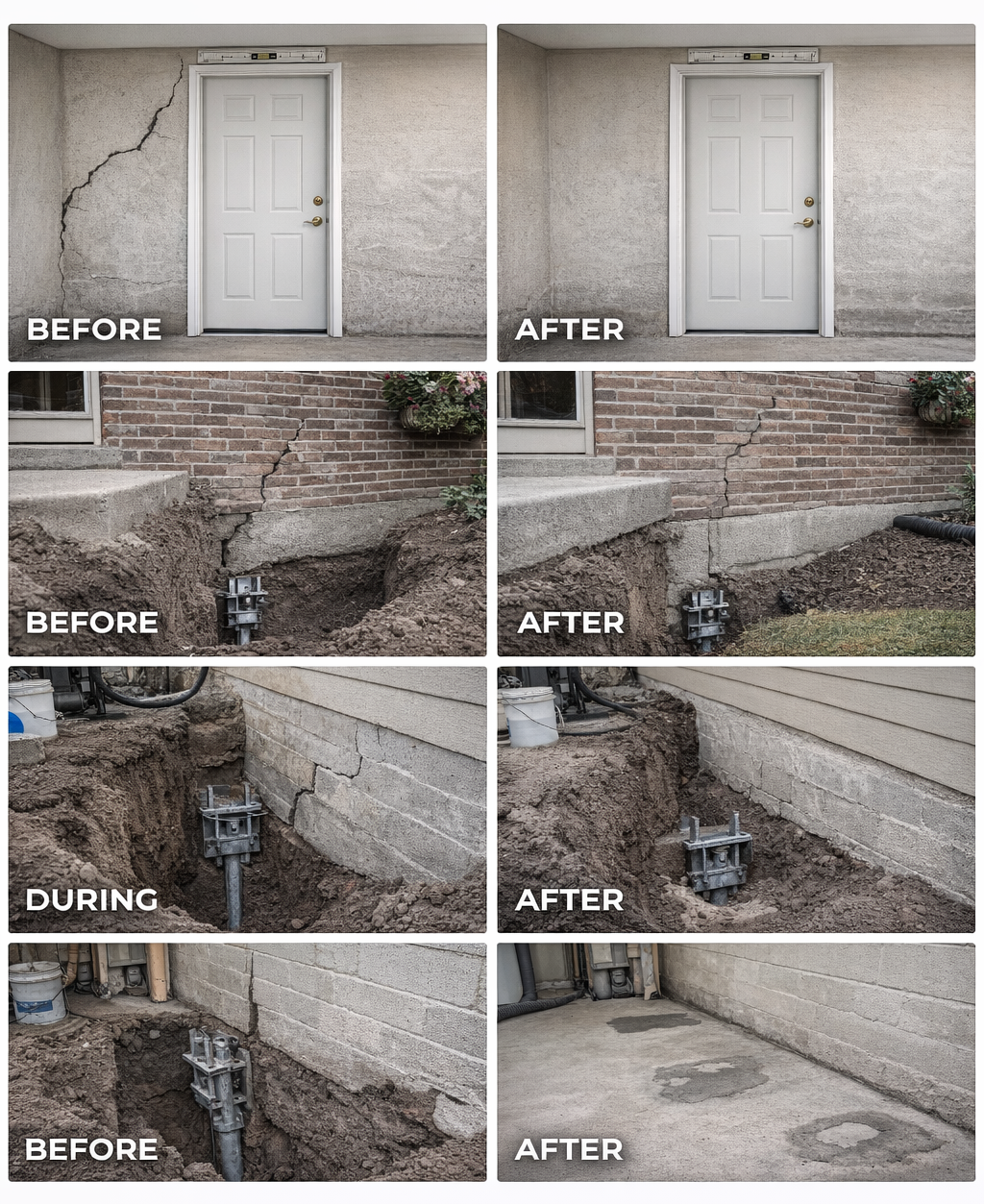
When a foundation is stabilized, homeowners often report fewer new cracks, improved door operation, and a greater sense of confidence that the home is no longer “moving.” When lift is achievable, you may also see reduced floor slope and improved alignment.
Below is a real before/after photo set showing common settlement-related issues and improvement after correction. (Results vary by project - some cases allow meaningful lift, while others focus on stabilization.)
Before/after results (what changes after stabilization)
When a foundation is stabilized, homeowners often report fewer new cracks, improved door operation, and a greater sense of confidence that the home is no longer “moving.” When lift is achievable, you may also see reduced floor slope and improved alignment.
How to protect your foundation after repairs
Piers provide strong structural support, but Nebraska water management still matters. If water continues to pool near your foundation, it can create new movement elsewhere. Homeowners can protect repairs by focusing on:
- Gutter and downspout extensions that discharge well away from the foundation
- Positive grading so soil slopes away from the home
- Managing irrigation to avoid constant soaking at the foundation edge
- Addressing leaks quickly (hose bibs, sprinklers, buried lines)
- Keeping drainage paths clear so water doesn’t collect next to footings
Think of it like this: piers stabilize the load path, but drainage helps keep the surrounding soil conditions predictable. Together, they give you the best long-term outcome.
Why piers are often the “right tool” when settlement is active
Homeowners sometimes try multiple rounds of cosmetic repairs before addressing settlement: patching drywall cracks, adjusting doors, replacing caulk, or releveling a porch step. Those fixes can help the symptoms look better, but if the foundation continues to move, the symptoms often return. Piers are designed for the moment when the problem is no longer cosmetic - it’s structural support.
In Nebraska, active settlement often shows up after weather swings: a wet spring followed by a dry summer can change moisture content in clay soils quickly. That change can reduce bearing strength under one portion of a footing, especially near corners or where downspouts discharge too close to the home. When the support layer becomes inconsistent, a pier system can create a more reliable load path to deeper, steadier soil.
Common myths about foundation settlement
- Myth: “Every crack means the foundation is failing.” Reality: Some cracks are normal; patterns and change over time matter most.
- Myth: “If I add dirt along the wall, it will fix settlement.” Reality: Grading helps water, but it doesn’t restore lost bearing capacity under a footing.
- Myth: “Piers are only for very old homes.” Reality: Newer homes can settle too if soil conditions and drainage are unfavorable.
After repairs: simple maintenance that protects your investment
Once a foundation is stabilized, you can keep things that way by making soil moisture changes less extreme. That doesn’t mean keeping soil constantly wet or dry; it means avoiding big swings. Many Nebraska homeowners do well by keeping downspouts extended year-round, correcting negative grading, and making sure landscaping doesn’t trap water against the foundation. If you use sprinklers, aim them so they water the lawn - not the foundation edge every day. These small habits reduce the chances of new movement in other parts of the home.
FAQ: Foundation piers for Nebraska homeowners
Do piers fix cracks?
Piers address the structural cause: movement from settlement. Existing cracks often remain visible and may need cosmetic repair afterward, but stabilizing the foundation helps prevent cracks from getting worse or new cracks from forming due to ongoing movement.
How many piers do I need?
It depends on where the load needs support and the extent of settlement. Some homes need just a few piers at one corner; others need a line of piers along a wall. A site evaluation determines placement and quantity.
Will the house be lifted back to “perfect”?
Sometimes partial lift is possible, but the safest goal is always stabilization. The amount of lift depends on soil, structure, how long the settlement has existed, and how the home has adjusted. A realistic plan focuses on stopping movement first.
Are helical piers better than push piers?
Not universally. Helical and push piers solve similar problems in different ways. The best choice depends on soil conditions, loads, access, and project goals. A professional can recommend which system fits your home.
What should I do before scheduling a pier inspection?
Note the symptoms you’re seeing (where cracks are, which doors stick, when issues worsen). If possible, take photos over time. Also check basic drainage items like downspouts and grading - those details help explain why settlement is happening.
If you’re not sure whether you need piers, that’s normal. The right answer comes from measuring the home, understanding the pattern of movement, and matching the repair to the cause. The earlier you get clarity, the more options you usually have.
Next steps
If you suspect foundation settlement, the best first step is a measurement-based evaluation: identify where movement is happening, what’s likely causing it, and whether stabilization is needed. Piers are a proven solution when near-surface soils can’t provide reliable support.
Need help in Nebraska? Tillotson Enterprises works with homeowners across Nebraska to diagnose settlement and install pier systems designed to stabilize foundations for the long haul. We’ll explain the “why,” the options, and what results you can realistically expect.