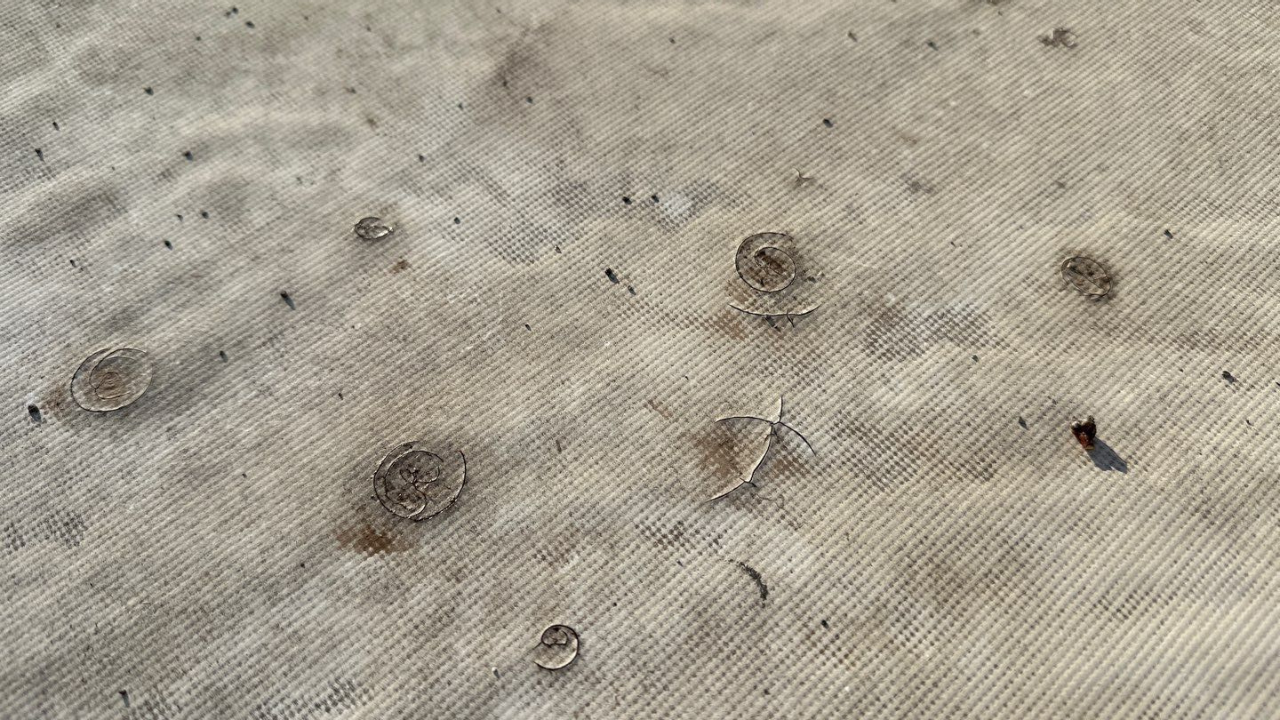
Why does hail hit Nebraska and the Midwest so hard?
If you own a commercial building in Nebraska or the surrounding Midwest, hail is not a rare event. It is a recurring risk that should be treated like a normal part of long-term roof planning.
Many of the states surrounding Nebraska are also frequently affected by severe thunderstorms that produce hail, including Kansas, Iowa, South Dakota, Missouri, and parts of Colorado. To keep this honest and verifiable, the simplest way to support that reality is to rely on NOAA’s severe weather reporting infrastructure. NOAA’s Storm Events Database compiles severe weather events, including hail, based on National Weather Service data collection. That database is widely used to review storm history by location and date. [4]
In practical terms, “hail risk” in this region is not just about one storm. It is about repeat exposure across multiple years. A roof might survive one storm without leaking, but repeated storms can gradually wear away protective layers, stress seams, and turn small defects into bigger ones.
That brings us to the most important question most building owners ask after a hail event.
Does hail damage always cause leaks right away?
No.
One of the biggest misconceptions about hail is: “If it is not leaking, there is no damage.”
NRCA guidance emphasizes that hail damage is often misunderstood and that once it is identified it can be quantified and evaluated economically, including decisions to repair specific areas or replace a roof system. [5] In other words, it is not mysterious, but it does require proper inspection.
NRCA also notes that hail damage is typically assessed by an inspection that may occur several days to several months after the hail event. [2] That matters because some roof damage is visible immediately, while other damage can be subtle and may not show interior symptoms until later.
So the absence of a leak does not automatically mean “no problem.” It means “inspect and verify.”
What actually happens when hail hits a commercial roof?
When hail hits a roof, the roof experiences an impact event. The severity of the impact depends on variables that often change from storm to storm:
- Hailstone size and density
- Wind speed and direction
- Impact angle
- Roof type and thickness
- Roof age and existing wear
- Condition of protective surfaces, including coatings
NRCA’s hail guidance discusses the need for structured assessment and classification because a lot of the confusion comes from inconsistent evaluation and inconsistent terminology. [1] The point is not to guess from the ground. The point is to look at the system and identify what kind of damage occurred and whether it is cosmetic or functional.
What is the difference between cosmetic hail damage and functional hail damage?
This is where owners and insurance discussions often get messy.
NRCA materials distinguish the idea of “functional damage” as damage that actually affects the roof’s ability to perform, such as fractures that expose underlying layers or create openings that can allow water entry. [5] Cosmetic damage is damage that changes appearance but does not reduce performance.
The key is that the same storm can produce both kinds of damage on the same roof, especially on large commercial roofs with multiple materials and details.
A clean approach is:
- Identify where impacts occurred
- Determine whether the waterproofing layer was compromised
- Determine whether other components (seams, flashings, penetrations) were affected
- Determine whether moisture entry occurred
NRCA guidance stresses that hail damage can be quantified and then evaluated for repair-versus-replace decisions. [5]
Why do Midwest roofs need special attention after hail?
Because repeat hail exposure changes the conversation.
A single hailstorm might create small impacts that do not leak. But in hail-prone areas, roofs often see multiple hail events across their service life. Over time, repeated impacts can:
- Reduce protective coating thickness
- Increase wear on high-traffic or high-stress zones
- Accelerate aging of exposed materials
- Increase the likelihood that the next storm creates functional damage
This is why post-storm inspection should be treated as routine building maintenance in Nebraska and surrounding states, not as a once-in-a-decade emergency measure.
How does hail damage different commercial roof systems?
A roof is not one material. Many commercial roofs combine membranes, metal edge details, rooftop equipment, and penetrations. Hail can affect each of those components differently.
NRCA’s hail assessment guidance addresses classification and damage susceptibility across generic roof system categories. [1] Below is a practical, system-by-system breakdown that matches how building owners and facility managers experience hail damage in the field.
How does hail damage single-ply roofs like TPO, PVC, and EPDM?
Single-ply membranes are common in commercial construction, especially on low-slope roofs. They are designed to be flexible and waterproof, but hail can still create issues, particularly when membranes are aged, stressed, or installed over substrates that allow impact deformation.
What types of hail damage can occur on single-ply membranes?
Common forms include:
- Surface bruising or impact marks
- Cuts or punctures
- Fractures in stressed zones
- Damage at seams or terminations
- Damage at flashings and penetrations
The reason single-ply damage matters is simple: if the membrane is breached, water can enter the roof system.
Why do seams and details matter so much?
Large commercial roofs often have:
- Many rooftop penetrations
- Parapet walls and edge details
- HVAC curbs and supports
- Expansion joints and transitions
Even if the open field looks fine, damage around details can still compromise waterproofing. That is why professional inspections matter, and why NRCA emphasizes inspection as the basis for assessment. [2]
How does hail damage metal roofs?
Metal roofs often show dents after hailstorms. The hard part is deciding whether dents are purely cosmetic or whether they indicate performance risk.
What kinds of problems can hail create on metal roofs?
- Dents in panels
- Deformation at ribs or profiles
- Coating damage that may increase corrosion risk
- Stress at seams or locks
- Damage to fasteners and washers
NRCA consumer-facing guidance discusses hail impacts on metal roofs and the reality that dents are often treated as aesthetic issues, which can create disputes. [6] The key point for owners is: do not stop at “it is dented.” Evaluate whether the roof’s protective coating or seams were compromised.
What should you inspect after hail on a metal roof?
- Panel seams and locks
- Fastener conditions
- Flashings and trim
- Coating condition
- Roof-to-wall transitions
Even if dents do not leak today, coating damage or seam disruption can become tomorrow’s maintenance issue.
How does hail damage built-up roofing and modified bitumen?
Built-up roofing systems and modified bitumen roofs depend on layered construction and protective surfacing.
What is a common hail issue on asphalt-based surfacing?
NRCA’s hailstorm repair document notes that hail damage to asphalt shingles can include granule loss, and that new asphalt shingles tend to be more resistant than older shingles because asphalt becomes more brittle with age. [2] While commercial low-slope systems are not the same as shingles, the principle about brittleness and protective surfacing still matters. Aging materials often perform worse under impact.
What hail effects are common on low-slope asphalt-based systems?
- Surface cracking
- Scarring or displacement of surfacing
- Splits at laps or transitions
- Exposure of underlying layers when surfacing is lost
The “when should you worry” answer often depends on whether the surfacing loss exposes underlying waterproofing layers or creates openings.
How does hail damage spray polyurethane foam roof systems?
SPF roofing is common in restoration and some commercial applications. It is a system that includes foam and a protective coating. The coating is not optional. It is part of the roof’s weather protection.
What does SPFA say about hail and SPF roofing?
SPFA-139 is specifically focused on recommendations for repair of SPF roof systems due to hail and wind-driven damage. [3] SPFA also lists SPFA-139 in its technical documents library and describes it as guidance on how to evaluate and repair an SPF roof system after hail or wind damage. [7]
What kinds of hail damage can occur on SPF roofs?
- Coating fractures
- Punctures through the coating
- Impact depressions
- Gouges that expose foam
- Damage at flashings and penetrations
Does SPF hail damage always cause leaks?
Not necessarily. A key point in published SPF repair guidance is that some impact-related damage can often be repaired and does not automatically require replacement, with the decision driven by evaluation and the condition of the system. [8]
That is why SPF systems are often evaluated for repair scope rather than immediately assumed to be total-loss.
How should SPF hail damage be handled?
SPFA-139 is centered around evaluating information collected from investigation and making rehabilitation or repair recommendations. [3] The practical takeaway is:
- Inspect coating integrity
- Identify exposed foam, if any
- Determine repair strategy based on observed damage
- Restore protective coating continuity where needed
What does NRCA recommend for post-hail assessment?
NRCA’s “Roof Repair After a Hailstorm” guidance lays out a straightforward reality: assessing hail damage is accomplished through roof system inspection, and that inspection can occur days to months after the hail event. [2]
NRCA also highlights a practical verification tactic: determining whether hail actually fell at a site may be made through statements and weather reports, and inspection of thin metal fixtures can help verify hail impact. [2]
This matters because in real disputes, it is common for people to argue whether hail occurred, whether it was large enough, and whether damage is related.
A credible assessment is built on:
- Roof inspection findings
- Weather evidence for time and place
- Documentation of observed impacts
- Evaluation of whether damage is functional
What should a commercial roof inspection include after hail?
A thorough post-hail inspection commonly includes:
- Open field evaluation of the primary roof surface
- Seams, laps, and attachment zones
- Flashings and parapet transitions
- Roof penetrations and curbs
- Rooftop equipment impacts
- Drains, scuppers, and gutters
- Interior checks for staining or moisture patterns
NRCA’s guidance stresses that once hail damage is identified it can be quantified and assessed economically for repair-versus-replace decisions. [5]
Why does documentation matter so much after a hailstorm?
Documentation matters for two reasons:
1. It helps you make the right roof decision.
2. It supports insurance conversations when they occur.
NRCA’s hailstorm repair guidance emphasizes inspection-based assessment and gathering information about whether hail actually fell at the site. [2] That naturally leads to documentation: photos, notes, and location details.
A good documentation package commonly includes:
- Photos of impacts with scale reference
- Date and time of inspection
- Roof plan zones for where impacts were found
- Notes on seams, flashings, penetrations
- Photos of related damage to soft metals or equipment
When should you worry after hail in Nebraska and the Midwest?
Here is a practical way to decide when concern is warranted.
Should you worry if you see punctures, splits, or coating breaks?
Yes.
If the waterproofing surface is visibly breached, the risk of moisture entry is higher. NRCA materials emphasize functional damage as damage that affects performance through fractures or openings that expose underlying layers. [5]
That is a “do not ignore” category.
Should you worry if the roof is older or already worn?
Yes.
Age matters. NRCA notes that newer asphalt shingles are generally more resistant than older shingles because asphalt becomes more brittle with age. [2] Again, the principle is broader than shingles: older materials often become less impact-resistant.
Older roofs in hail regions should be evaluated more carefully because small impacts can have bigger consequences.
Should you worry if you see damage at seams, edges, and penetrations?
Yes.
Details are where many leaks begin. Even if the main field looks fine, seam or flashing damage can become a moisture pathway.
Should you worry if there are no leaks today?
Maybe, but only inspection can answer it.
NRCA explicitly recognizes that hail assessments may occur days to months after the hail event. [2] That is essentially an acknowledgment that damage does not always reveal itself immediately.
A roof can be damaged without immediate interior symptoms. Inspection verifies whether that damage is cosmetic or functional.
What happens if hail damage is ignored?
The risk of ignoring damage is not theoretical.
Small openings can allow moisture entry. Moisture can saturate insulation. Saturated insulation reduces performance and can create expensive problems when repairs finally occur.
NRCA’s guidance focuses on inspection and economic assessment because the cost difference between early repair and late repair can be significant. [5]
In the Midwest, where freeze-thaw cycles and heat can stress roof systems, small defects can worsen faster than many owners expect.
How does coating restoration fit into hail damage decisions?
A coating is not magic and it does not make a roof hail proof. Coatings are best described as a protective layer that can restore waterproofing continuity when the underlying roof is a suitable candidate.
SPF repair guidance emphasizes evaluation and repair strategy selection rather than automatic replacement. [8] That mindset is similar for many restoration approaches: inspect, classify, repair, restore.
When is coating restoration worth considering?
Coating restoration is commonly considered when:
- The roof is structurally sound
- The system is not saturated with moisture
- Damage is primarily surface-level
- The goal is to restore a continuous waterproofing surface
- A tear-off would create unnecessary disruption and cost
The decision must be inspection-driven. That keeps it honest and technical.
How can coatings help in a hail-prone Midwest climate?
Coatings can help by:
- Restoring a continuous surface over worn areas
- Sealing repaired zones after localized hail impact repairs
- Providing a renewed protective layer over compatible substrates
This is not a claim that coatings stop hail. It is a claim that coatings can be part of a restoration plan when conditions support it.
For a company like Tillotson that focuses on commercial coating solutions, it is reasonable to educate building owners about restoration pathways that include common commercial coating types such as acrylic, urethane, and silicone, and to match the coating selection to roof conditions and project goals.
The honest positioning is:
- Hail happens here
- Inspection determines damage type and severity
- Repairs address functional damage
- Restoration can extend service life when the roof is a good candidate
What should Midwest building owners do after a hailstorm?
Here is a simple, practical post-storm checklist that matches NRCA’s inspection-first approach. [2]
What should you do in the first 24 to 72 hours?
- Check for obvious interior leaks or ceiling stains
- Photograph any interior damage
- Look for rooftop equipment damage, if visible safely from the ground
- Record the date and time of the storm event
- Arrange for a professional roof inspection
What should you do during the roof inspection window?
NRCA notes inspections may occur days to months after the event, but earlier is often better for documentation and clarity. [2]
During inspection:
- Document impacts and damage locations
- Inspect seams, flashings, penetrations
- Verify hail impacts using evidence such as soft metal damage
- Identify whether damage is cosmetic or functional
What should you do after inspection?
- Decide on repair scope based on findings
- If needed, document for insurance conversations
- Consider restoration options if the roof is structurally sound and a candidate for renewal
- Set a follow-up inspection timeline, especially in hail regions
What are the key takeaways for Nebraska and surrounding Midwest states?
- NOAA’s storm reporting infrastructure documents hail events and storm history by location, supporting the reality of repeat hail exposure in this region. [4]
- NRCA emphasizes inspection-based assessment and recognizes inspections may occur days to months after hail events. [2]
- NRCA also explains that hail damage can be misunderstood, but once identified it can be quantified and evaluated economically for repair-versus-replace decisions. [5]
- SPF roofs have specific repair guidance in SPFA-139, which is designed to help evaluate hail damage and recommend appropriate repairs. [3]
- Restoration approaches, including coatings, can be a practical pathway when the roof is a suitable candidate and inspection findings support it. [8]
References
[1] National Roofing Contractors Association (NRCA). Hail Damage to Roofing: Assessment and Classification (PDF).
Source: https://www.nrca.net/roofingguidelines/pdf?id=99204&k=2439422
[2] NRCA. Roof Repair After a Hailstorm (PDF).
[3] Spray Polyurethane Foam Alliance (SPFA). SPFA-139: Recommendations for Repair of SPF Roof Systems Due to Hail and Wind Driven Damage (PDF).
Source: https://cc.conklin.com/files/pdf/Hail%20Repair%20-SPFA-139%20.pdf
[4] NOAA National Centers for Environmental Information (NCEI). Storm Events Database (hail and severe weather records).
Source: https://www.ncei.noaa.gov/stormevents/
[5] NRCA. Learn how to identify hail damage on roof systems (PDF).
Source: https://www.nrca.net/roofingguidelines/pdf?id=158908&k=1789444
[6] NRCA. After the hailstorm: metal roof dents and insurance positioning (PDF).
Source: https://www.nrca.net/roofingguidelines/pdf?id=168547&k=2553371
[7] Spray Polyurethane Foam Alliance (SPFA). Technical Documents listing for SPFA-139.
Source: https://www.sprayfoam.org/technical-documents/
[8] Recommendations for repair of SPF roofing after hail/wind damage (repair-focused guidance document hosted by General Coatings).