Nebraska basements and crawlspaces take a beating from moisture swings, freeze–thaw cycles, and soil pressure. If your block foundation wall is cracking, crumbling, or bowing, you may be wondering whether it can be repaired or whether it’s time for a full replacement. This homeowner guide from Tillotson Enterprises explains what causes CMU block walls to deteriorate, what warning signs to take seriously, and what wall replacement typically involves.
What a CMU block foundation wall is
CMU stands for Concrete Masonry Unit. In plain terms, it’s the concrete “block wall” used in many basements and crawlspaces. Blocks are stacked in rows (called courses) and held together with mortar joints. Some walls are reinforced with steel and filled with grout, while others - especially older walls - may have minimal reinforcement.
A properly built CMU wall can perform well for decades. But it’s important to understand what makes block different from poured concrete: block walls have many joints, and joints are often the first place that water, salts, and freezing temperatures do damage. If moisture is allowed to stay against the wall year after year, the wall can slowly lose strength - sometimes without dramatic symptoms until the damage is advanced.
Homeowner-friendly takeaway: A block wall is a system (block + mortar + reinforcement + drainage). When water and pressure attack the system long enough, the wall can weaken even if the home itself is well built.
Why CMU walls fail more often in Nebraska
Nebraska’s environment is tough on foundations. Many neighborhoods sit on clay-rich soils that hold water. In wet seasons, those soils can become saturated and heavy, pushing laterally against basement walls. In dry seasons, soils can shrink and change the way pressure is applied. Add winter freeze–thaw cycles and spring snowmelt, and you get repeated stress on foundation materials.
The most common forces behind CMU deterioration in Nebraska are:
- Moisture exposure: Persistent dampness breaks down mortar, increases efflorescence, and can lead to spalling.
- Freeze–thaw: Water in tiny pores expands when it freezes, causing gradual cracking and surface flaking.
- Soil pressure: Saturated soil pushes inward; over time this can crack or bow a wall that lacks reinforcement.
- Drainage issues: Short downspouts, negative grading, and clogged perimeter drains keep water where you don’t want it.
- Age and construction details: Older walls may have less reinforcement or outdated waterproofing methods.
None of this means every Nebraska block wall is “doomed.” It means the wall is more likely to need help if water is allowed to collect around the foundation. The goal is always to identify whether you’re dealing with isolated damage (often repairable) or system-wide deterioration (often better solved with replacement).
Warning signs your wall may be beyond patching
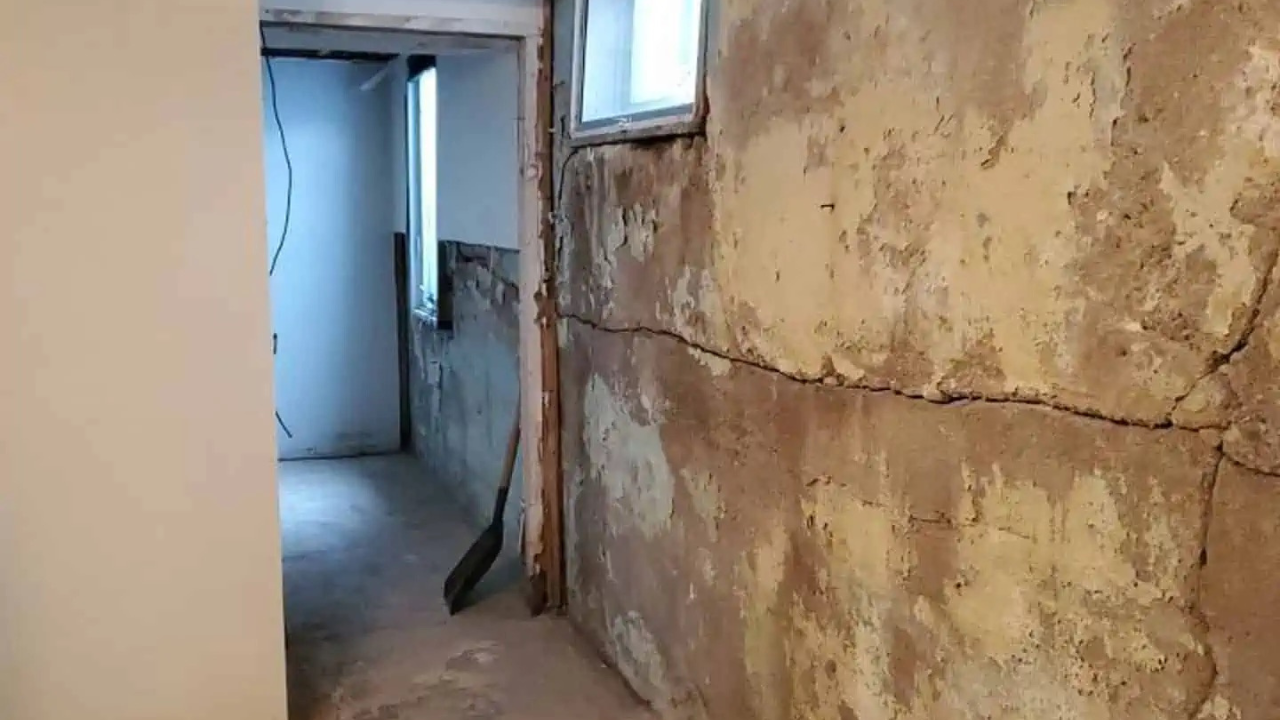
Patching a deteriorating block wall can feel like painting over rust. If the underlying wall is losing strength, surface repairs may look better for a while but won’t change what’s happening inside the wall system. Here are warning signs homeowners should take seriously:
- Widespread mortar decay: Joints are powdery, missing, or easily scraped out with a screwdriver.
- Spalling or crumbling block faces: The outer surface flakes off in layers or breaks away at corners.
- Stair-step cracking that grows: Cracks following mortar joints that widen, lengthen, or reappear after repair.
- Bulging / bowing: The wall is no longer straight; even a modest inward curve can indicate structural stress.
- Chronic water intrusion: Water returns despite interior sealants or repeated cleanups.
- Movement at the top of the wall: Gaps at sill plates, shifting framing, or separation where the wall meets the floor system.
If you see one of these, it does not automatically mean replacement is required. The next step is to determine the severity and the cause. The decision is usually based on a combination of wall condition, wall movement, and water conditions around the home.
Repair vs. replace: how homeowners can think about the decision
Homeowners often ask, “Can this be repaired?” That’s a fair question. The honest answer is: sometimes, yes. If deterioration is limited, and the wall is still structurally sound, targeted repairs can make sense. Replacement becomes the better choice when the wall’s materials are compromised across a large area or the wall is moving in ways that a patch won’t stop.
When repair is often reasonable
- The wall is mostly straight (no meaningful bowing).
- Damage is localized (one area, one crack, a small section of mortar).
- Moisture issues can be corrected with drainage changes.
- The wall still feels solid - blocks and joints aren’t crumbling everywhere.
When replacement is often the safer long-term call
- Mortar and block faces are deteriorating across a wide section.
- The wall is bowed/bulged or shows signs of ongoing movement.
- There’s recurring water intrusion with visible long-term moisture damage.
- Past patching has failed or the wall keeps getting worse.
A good rule of thumb: if you’re relying on compromised block and mortar to carry soil loads, braces and patches can become “temporary solutions” by default. A replacement project is a chance to rebuild strength and address water management properly so the new wall stays healthy.
Step-by-step: what CMU wall replacement looks like
“Wall replacement” can sound like a huge mystery. The process is more straightforward than most homeowners expect, and it follows a sequence designed to keep the home stable while compromised masonry is removed and rebuilt. The exact plan depends on access, how long the wall is, and how the home is framed, but the stages below are typical for many Nebraska homes.
1) Measure, diagnose, and plan the rebuild
The first job is understanding what you’re fixing. A thorough evaluation looks at wall alignment, crack patterns, moisture staining, and the condition of the footing area. Importantly, it also looks outside: grading, downspouts, and drainage paths. Without solving the water problem, replacement doesn’t reach its full potential.
2) Prepare access and protect the work area
Depending on the home, some work occurs from the exterior (excavation) and some from the interior (demolition and rebuild). A professional crew will plan for dust control, safe material handling, and protection of finished basement areas. If the basement is finished, this step matters a lot for homeowner comfort.
3) Remove compromised materials
Deteriorated block and failing mortar are removed in a controlled way. The goal is to remove what can’t be trusted structurally while keeping the home supported. When walls are actively deteriorating, removal often reveals the “why” - long-term moisture, poor drainage, or past repairs that didn’t address root causes.
4) Rebuild with proper reinforcement and detailing
The replacement wall is built as a system: new CMU, properly tooled mortar joints, reinforcement as required, and a finished wall line that’s straight and stable. The specific reinforcement details can vary by engineer or design, but the concept is consistent: the new wall must resist soil loads and remain stable over time.
5) Restore the site and confirm performance
After rebuild and waterproofing work (covered next), the area is restored: backfill, grading, and cleanup. Homeowners should leave with a clear understanding of what changed, what was installed, and what maintenance (if any) helps the new system perform long term.
Waterproofing and drainage: the difference between “new” and “new that lasts”
Nebraska homeowners often learn the hard way: moisture is the main driver of long-term foundation deterioration. Even a brand-new block wall can be stressed if water is allowed to collect and saturate soil around the foundation. When soil stays wet, pressure increases and materials stay damp - two conditions that shorten the life of masonry.
A durable wall replacement plan usually includes practical water management steps such as:
- Downspout discharge away from the home: Extensions or buried lines that carry roof water away from the foundation zone.
- Positive grading: Soil sloping away from the home so surface water doesn’t collect against the wall.
- Exterior waterproofing (as appropriate): A membrane or coating to reduce moisture migration into the wall.
- Drainage paths: Ways for water to move down and away instead of building pressure against the wall.
Plain language: Wall replacement fixes structure. Drainage fixes the conditions that caused deterioration. You want both, because that’s how the new wall stays strong.
What to expect before, during, and after the project
Homeowners understandably want to know what disruption looks like. While every home is different, wall replacement is typically more manageable than people imagine, especially when the scope is clear and the work plan is organized.
Before work starts
- You’ll discuss the wall sections being replaced and why replacement is recommended.
- Access planning happens (interior pathways, exterior excavation areas, storage or utility considerations).
- You’ll review how water will be managed so the replacement isn’t “structure only.”
During the project
- There may be demolition noise and dust (a good crew manages this with containment and cleanup).
- Work proceeds in stages - removal, rebuild, detailing - rather than one chaotic day.
- You may see new block courses, mortar work, and a noticeably straighter wall line.
After completion
- Expect a clean, restored wall surface and clearer guidance on water management.
- Cosmetic items (if any) can be addressed once the structural work is complete.
- Ongoing maintenance is usually simple: keep gutters working and water moving away from the foundation.
Cost, value, and why homeowners choose replacement
Homeowners often hesitate on replacement because it sounds like “the biggest option.” That reaction is normal. But when the wall materials are already deteriorating broadly, replacement can actually be the most cost-effective path over time. The reason is simple: repeated small repairs add up. If mortar keeps turning to sand, blocks keep spalling, or the wall keeps moving, you can end up paying for multiple rounds of patching, cleanup, and repainting without ever restoring real structural confidence.
Replacement also protects value in ways that aren’t always obvious at first. A straight, sound foundation wall supports the structure above it, reduces the likelihood of new interior damage, and can improve the comfort and usability of basement space. Just as important, a properly executed replacement gives you an opportunity to improve drainage and waterproofing details so the wall is not constantly exposed to the same moisture conditions that caused the damage in the first place.
If you’re comparing options, a helpful way to think about it is “risk reduction.” A localized repair can be perfect when the wall is stable and damage is limited. A full replacement is chosen when the risk of continued deterioration is high because the wall system itself is compromised.
A simple maintenance checklist for Nebraska basements
After any foundation work - whether repair or replacement - small habits can protect your investment. Nebraska’s wet springs and freeze–thaw winters make water management a year-round priority. Consider this quick checklist:
- Clean gutters so they don’t overflow next to the foundation.
- Extend downspouts so discharge ends well away from the wall.
- Keep soil sloped away from the house; regrade low spots that collect water.
- Watch snow piles that melt against the foundation and saturate soil.
- Adjust sprinklers so they water the yard, not the foundation edge daily.
None of these steps replaces professional work when a wall is deteriorating, but together they reduce the moisture load that drives many foundation problems in Nebraska homes.
FAQ
Is wall replacement always necessary for a block wall?
No. Many block walls can be repaired or reinforced if the wall is structurally sound and damage is limited. Replacement is typically considered when deterioration is widespread, the wall is moving, or past repairs keep failing because the underlying wall system is compromised.
Will wall replacement stop basement water issues?
Wall replacement improves the structure, but long-term dryness depends on water management around the home. Most successful projects include practical drainage improvements (downspouts, grading, and appropriate waterproofing/drainage details) so water doesn’t continue to saturate the soil.
How do Nebraska weather patterns affect foundations?
Seasonal moisture swings and freeze–thaw cycles are a major factor. Wet periods saturate soils and increase pressure; freezing temperatures can expand water in small pores and cracks; dry periods can change soil volume. Good drainage reduces how extreme these changes are at the foundation wall.
What should I do right now if I’m worried about my block wall?
Start by checking water management: extend downspouts away from the foundation, ensure grading slopes away, and make sure gutters are functioning. Then get a professional evaluation to determine whether the wall is stable and repairable or whether replacement is the safest long-term path.
Need help in Nebraska? Tillotson Enterprises works with homeowners across Nebraska to evaluate deteriorating foundation walls and explain options in plain language - repair, reinforcement, or full CMU wall replacement when it’s the right call.